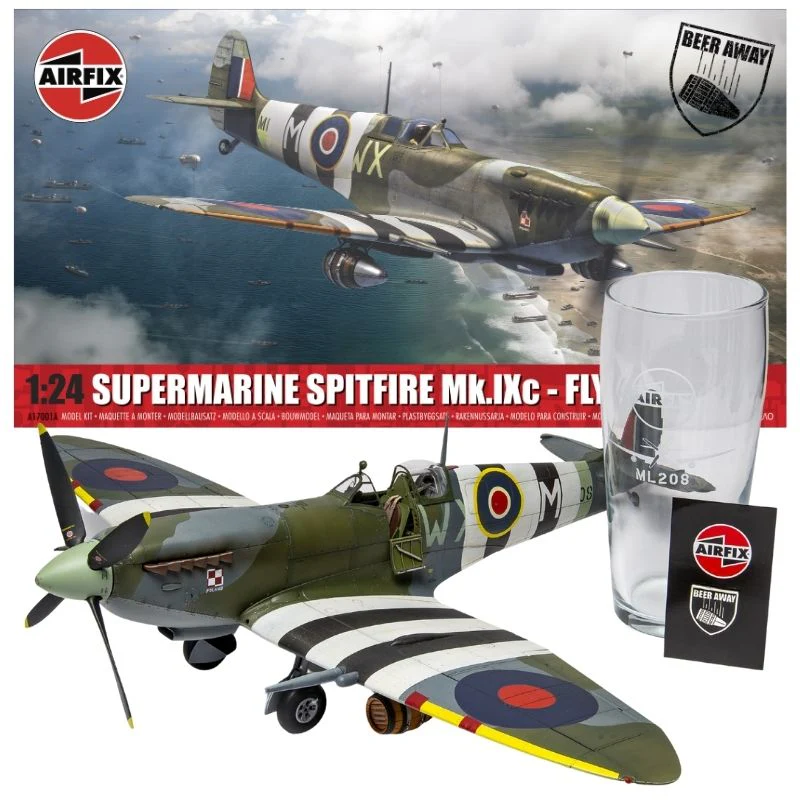
A17001A Supermarine Spitfire Mk.IXc Flying Dray Model Kit
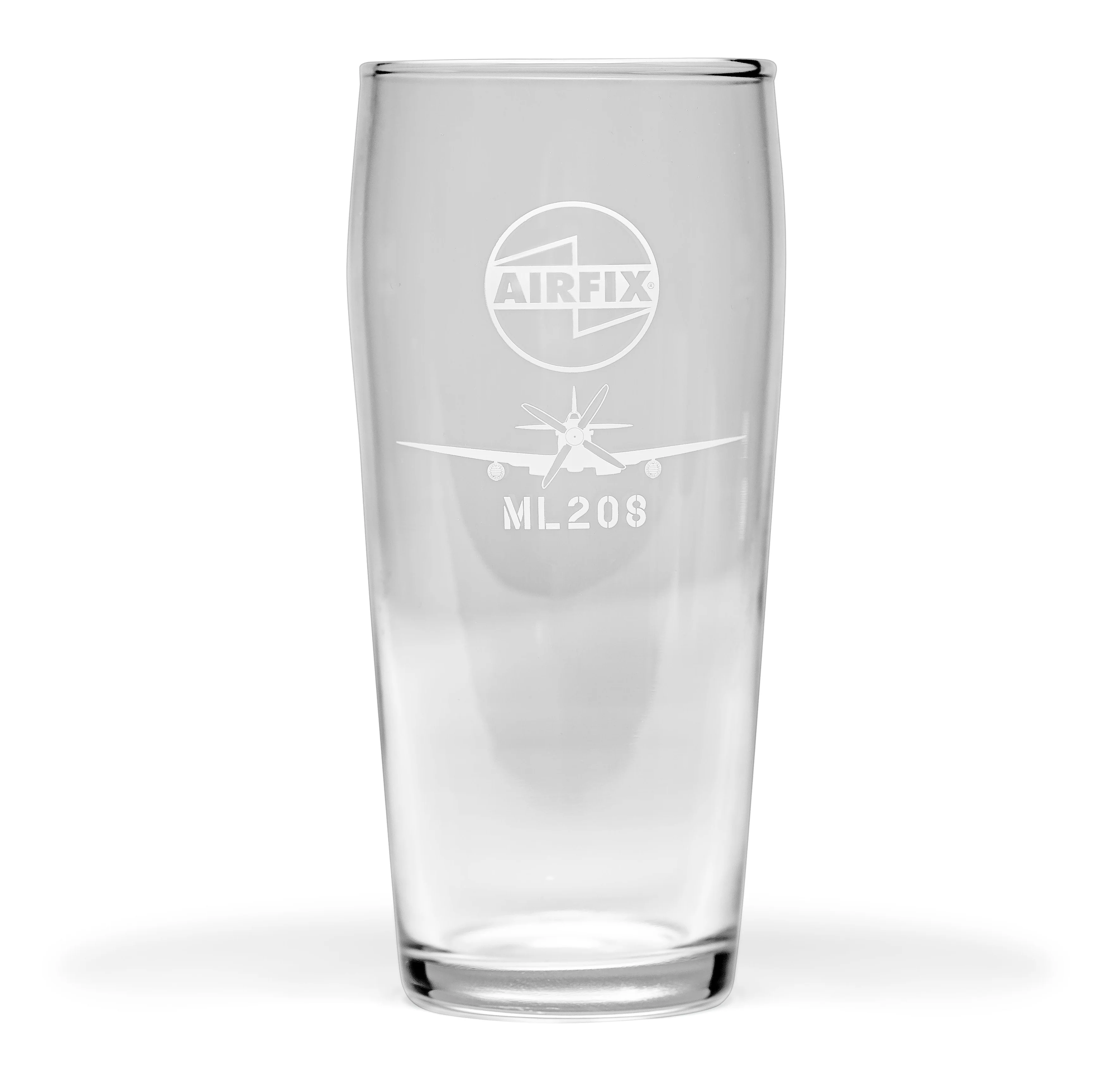
Every kit will come with a FREE PINT GLASS!
The Mission
A few weeks after D-Day, a newspaper ran a story that reported that only watery cider and poisoned water was available to our boys on the front.
Sadly, no spare transport aircraft were available to bring non-essential items to the forward landing grounds. As a result of this, Several of the Squadrons who were previously operating out of the airfields along the south-coast are thought to have taken part.
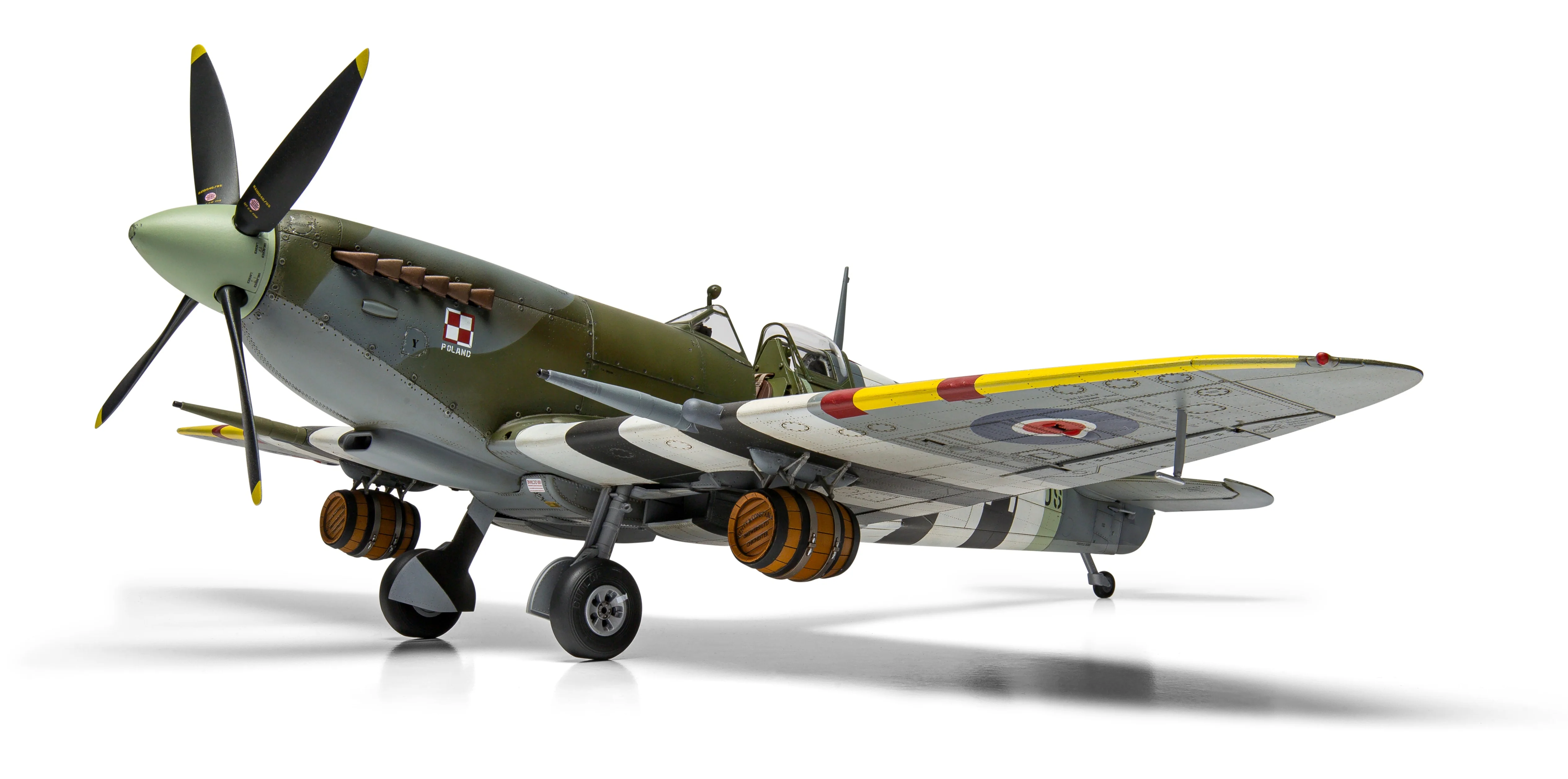
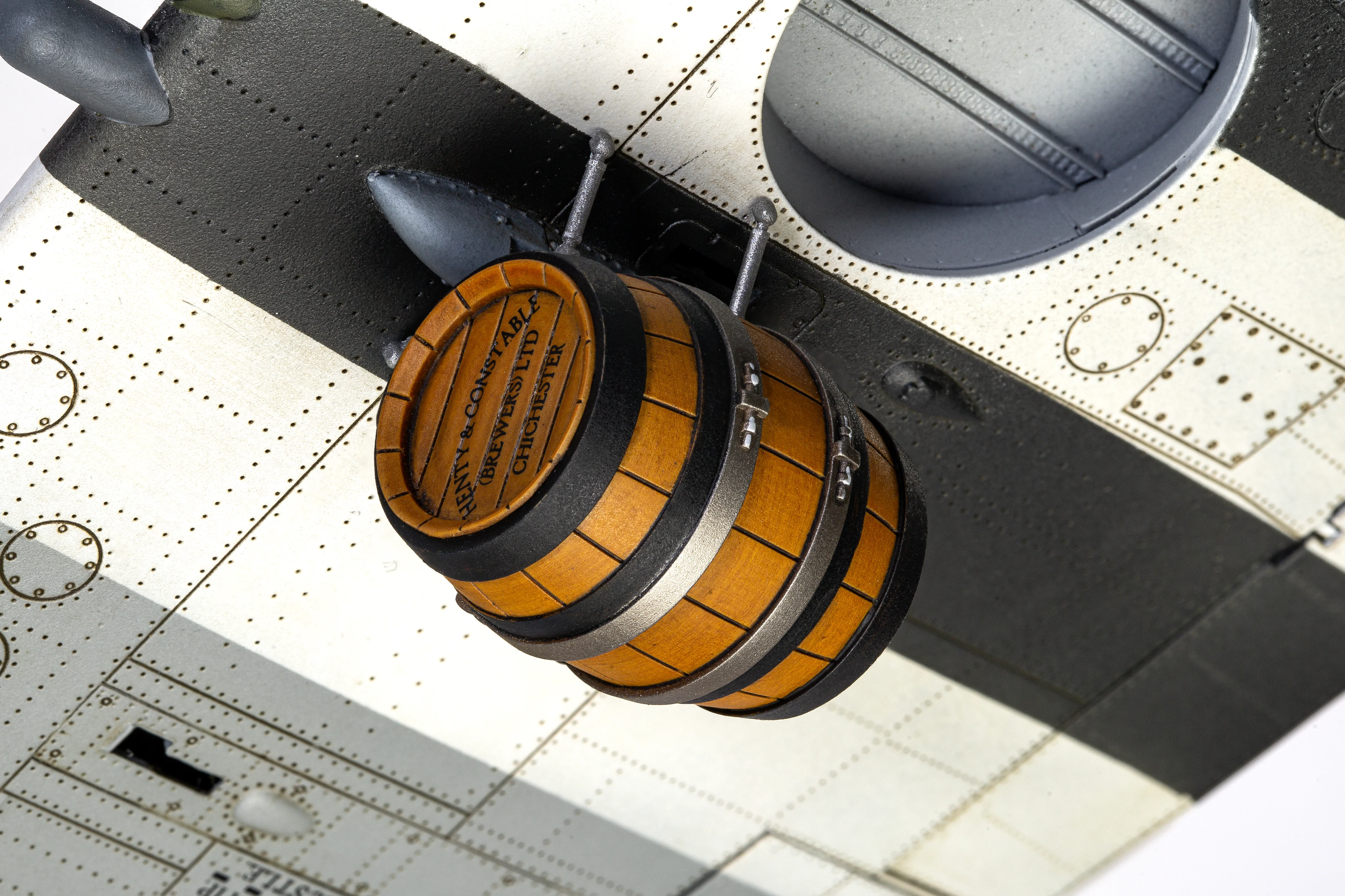
After initially using long range fuel tanks, the next methodology utilised was to fly beer in a cask. A modification was carried out to enable the cask to be carried on the Spitfires’ bomb racks.
Pilots with the RAF’s No. 131 (Polish) wing, claimed to have invented the idea of the “beer bomb”, using casks that had home-made nosecones fitted to make them more
aerodynamic.
“Beer Bombs” were adopted by the Canadians and USAF during the war.
The Kit
In the summer of 1944, after the D-Day landings, British troops pressing into Normandy faced fierce resistance—and a dry pint glass. Supplies were tight, and morale was vital. So, in one of the war’s most unexpected missions, Spitfire pilots took to the skies not just with ammunition—but with beer.
Ingenious airmen modified drop tanks and strapped barrels beneath their wings, delivering much-needed refreshment to parched troops across the Channel. Some called it “Operation Cheers.” These weren’t official missions. They were flights of morale. Spitfires—symbols of British grit—became airborne drays for a brief, glorious period.
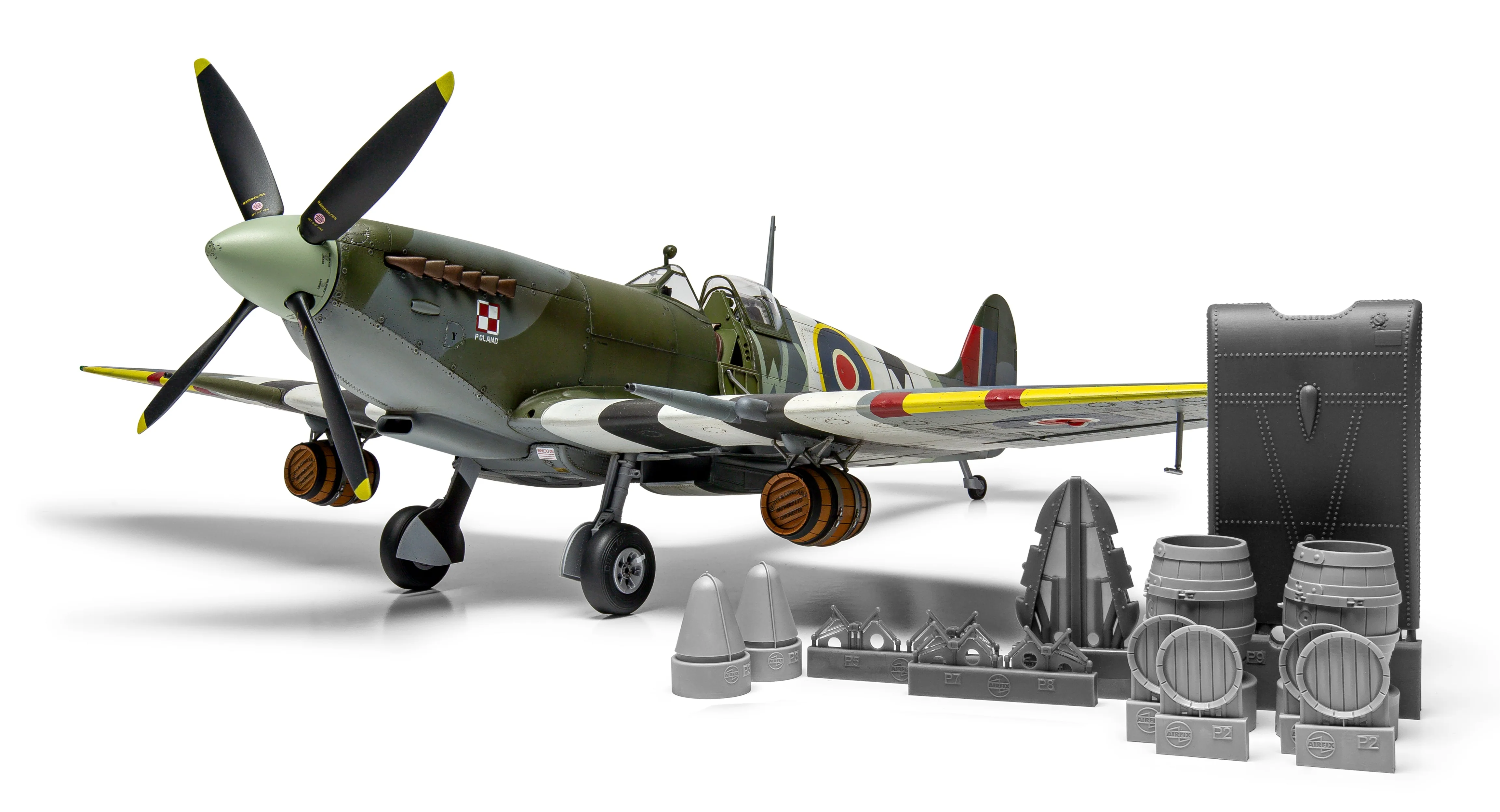
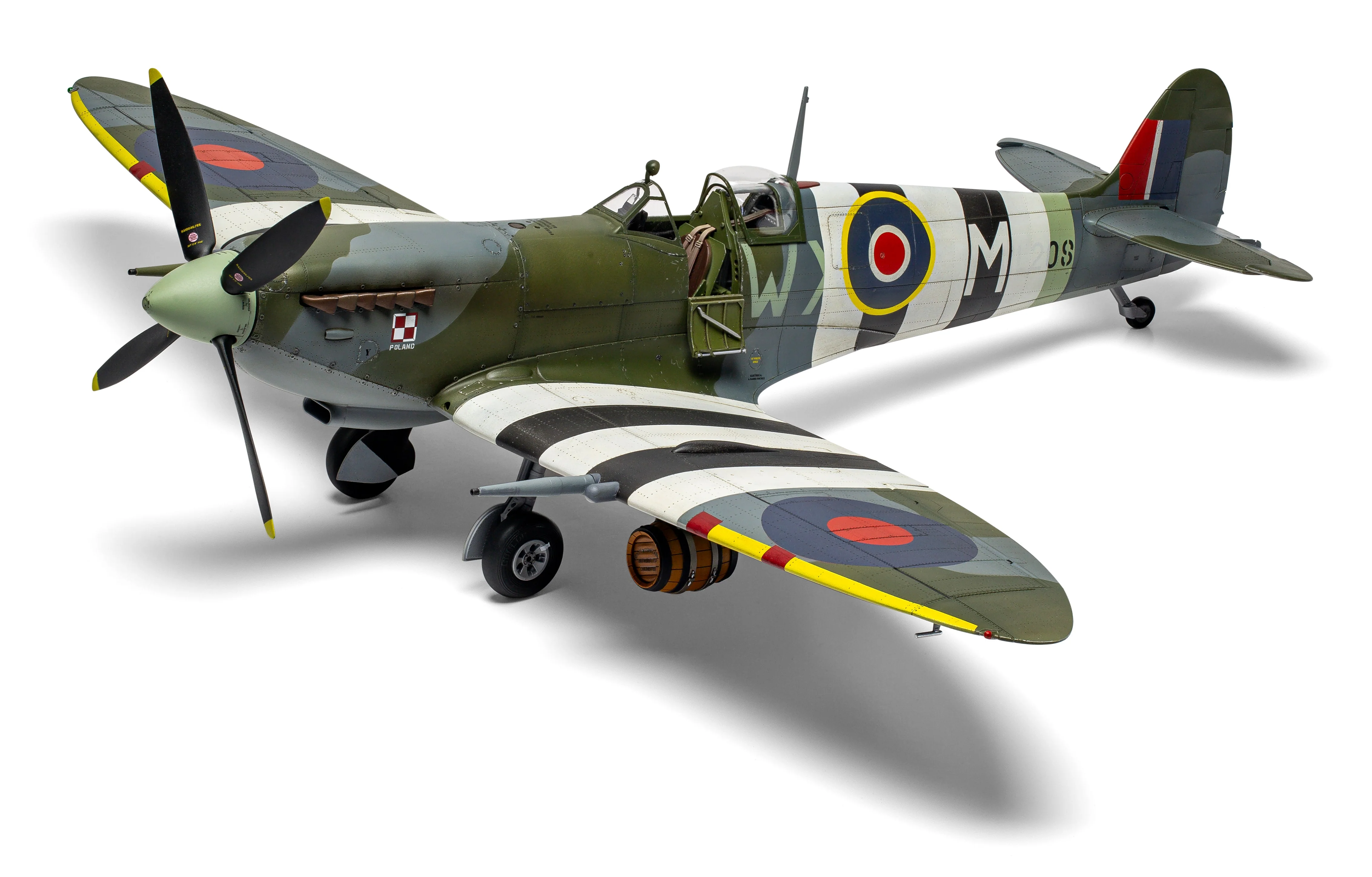
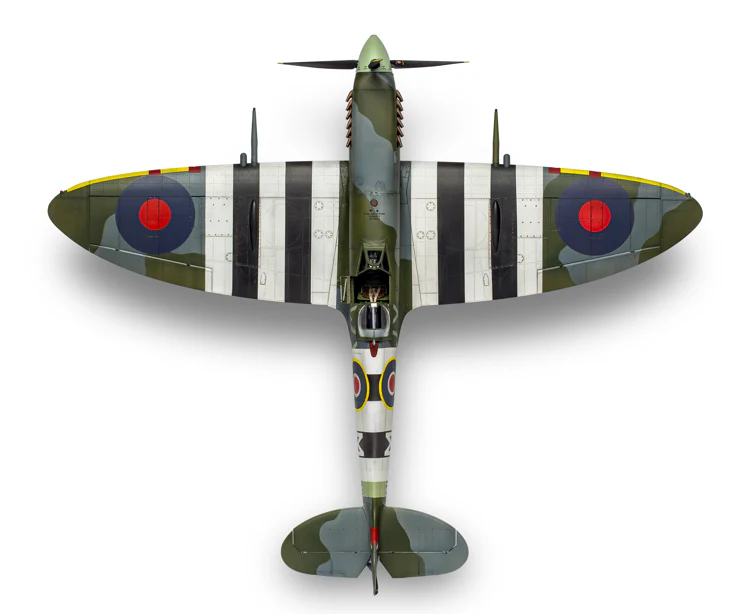
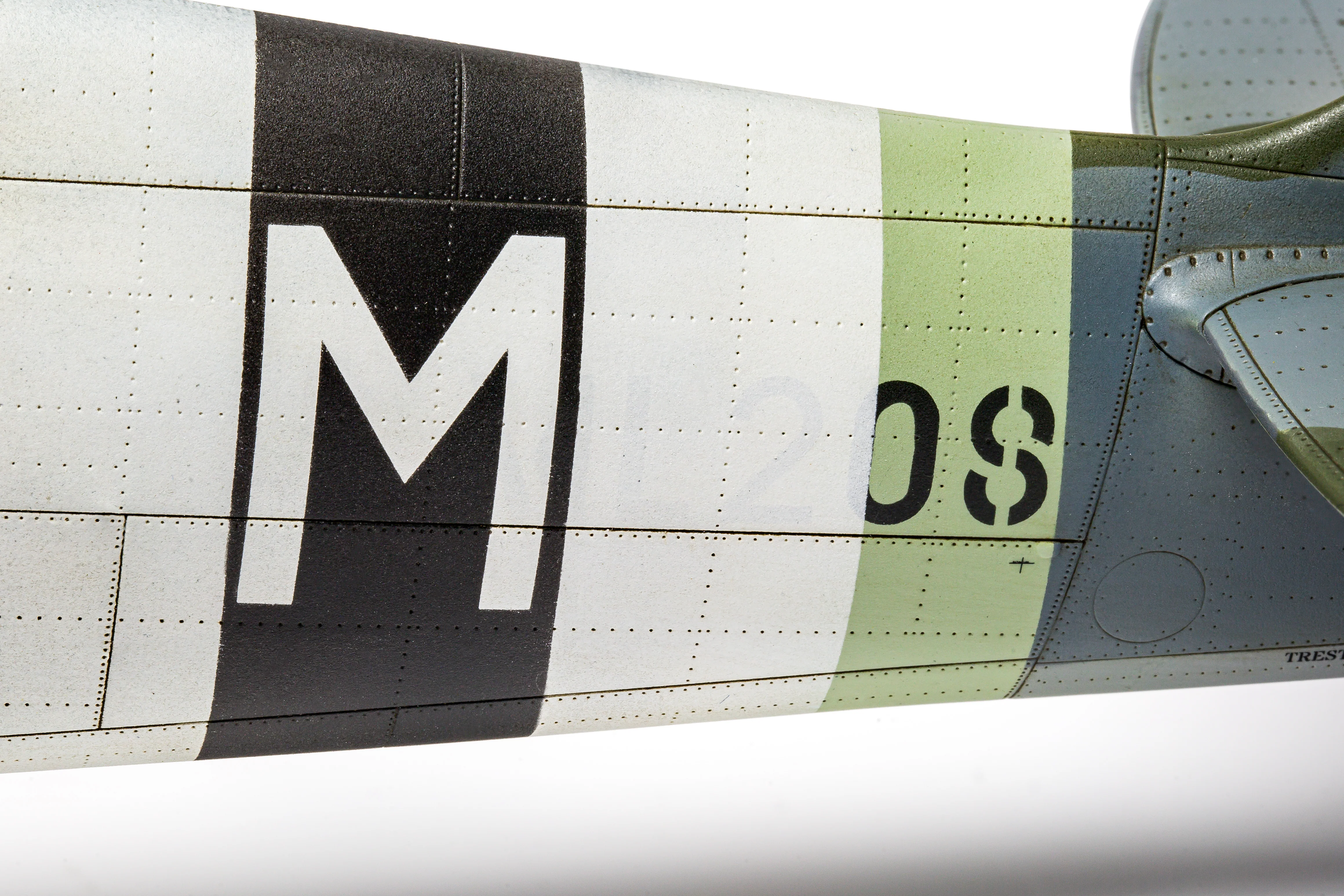
This Supermarine Spitfire Mk.IXc kit in 1:24 scale includes parts required to truly replicate the beer carrying Spitfires ‘Flying Drays’.
Extra Parts
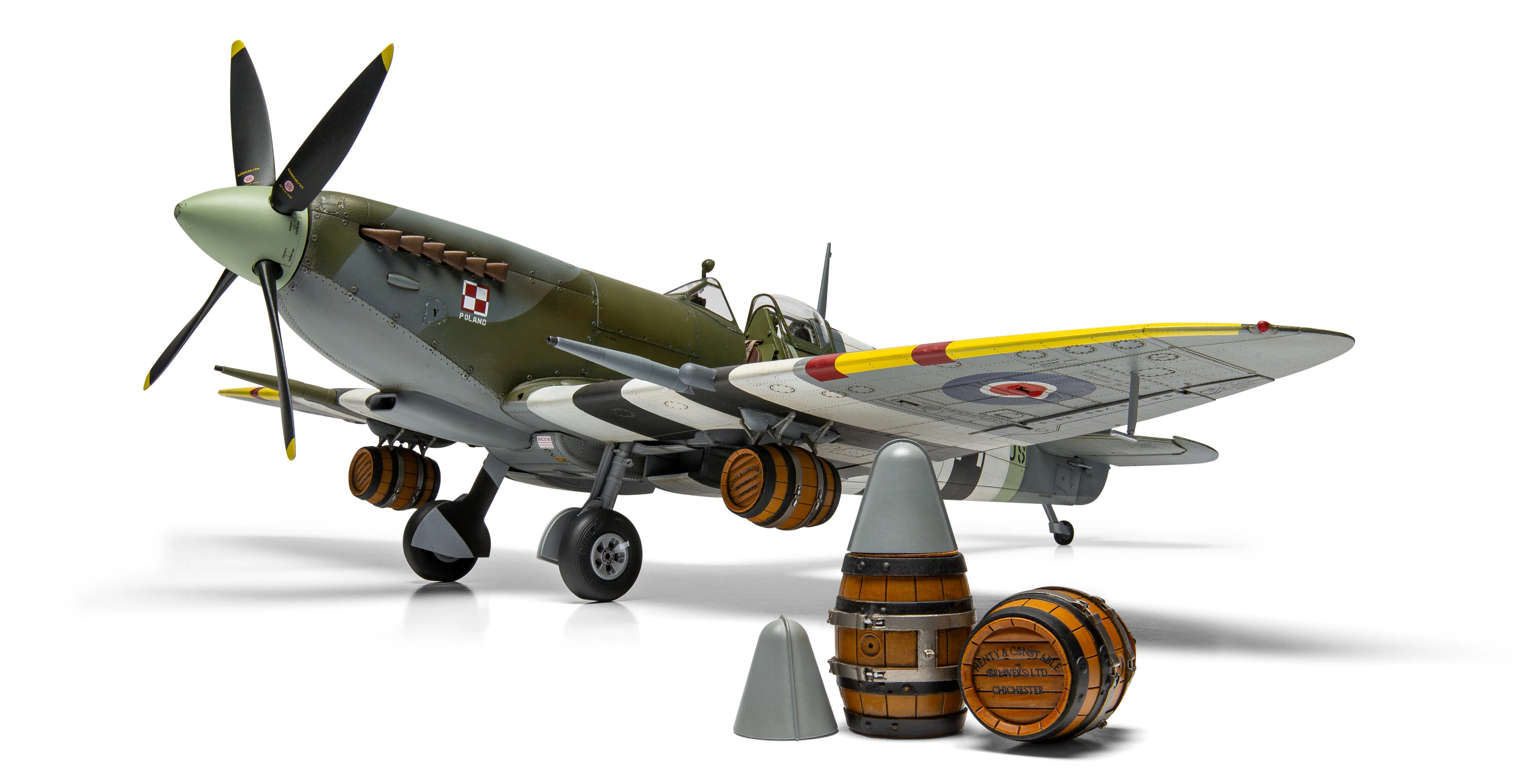
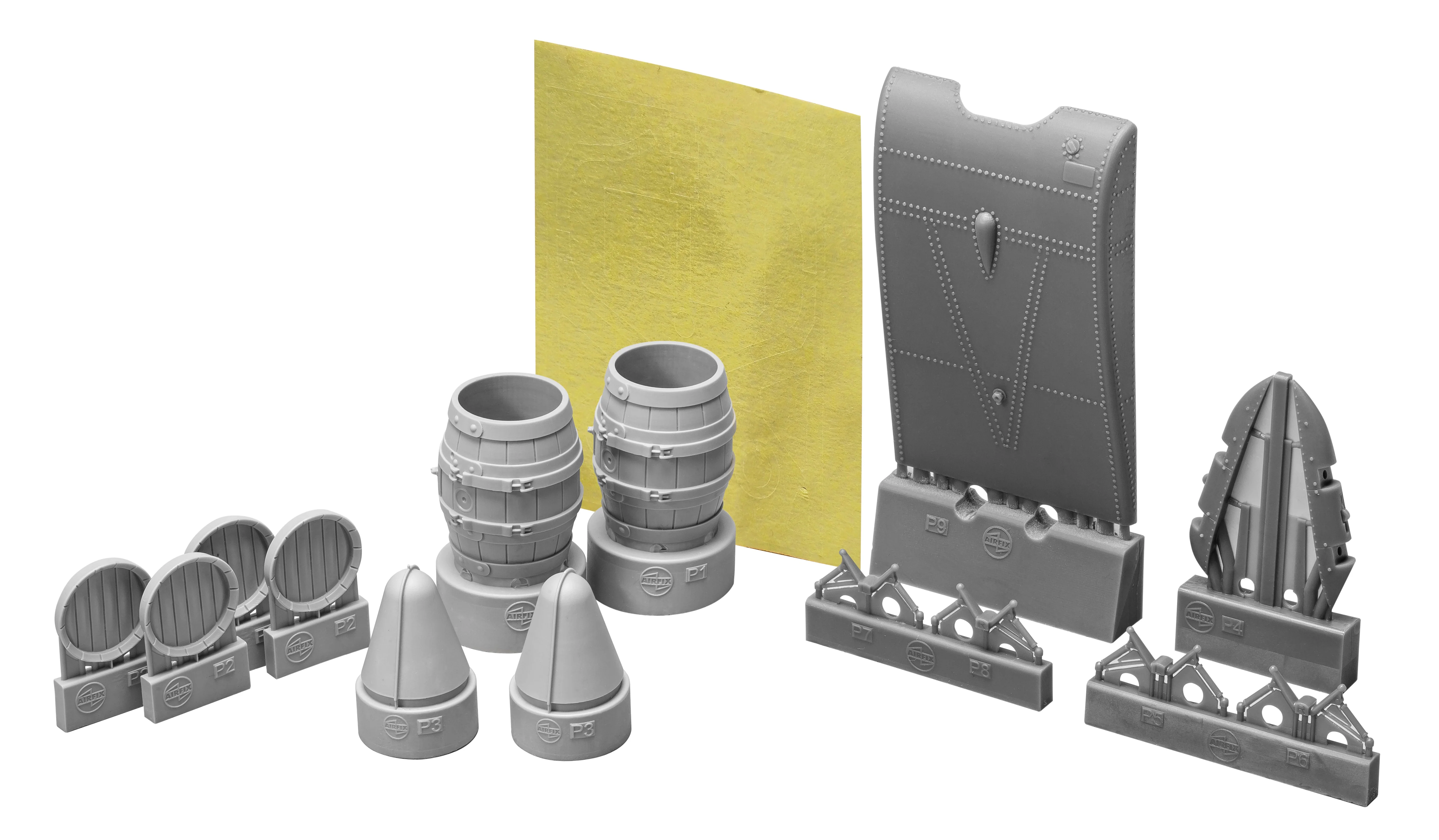
Included in this special release are high detail resin parts required to truly replicate the beer carrying Spitfires ‘Flying Drays’.
- 2 x Beer barrels, including lids barrel ends.
- 2 x Nose cones (Information available indicates that these were probably made from the rear end of a P-51 drop tank)
- 2 x Bomb racks
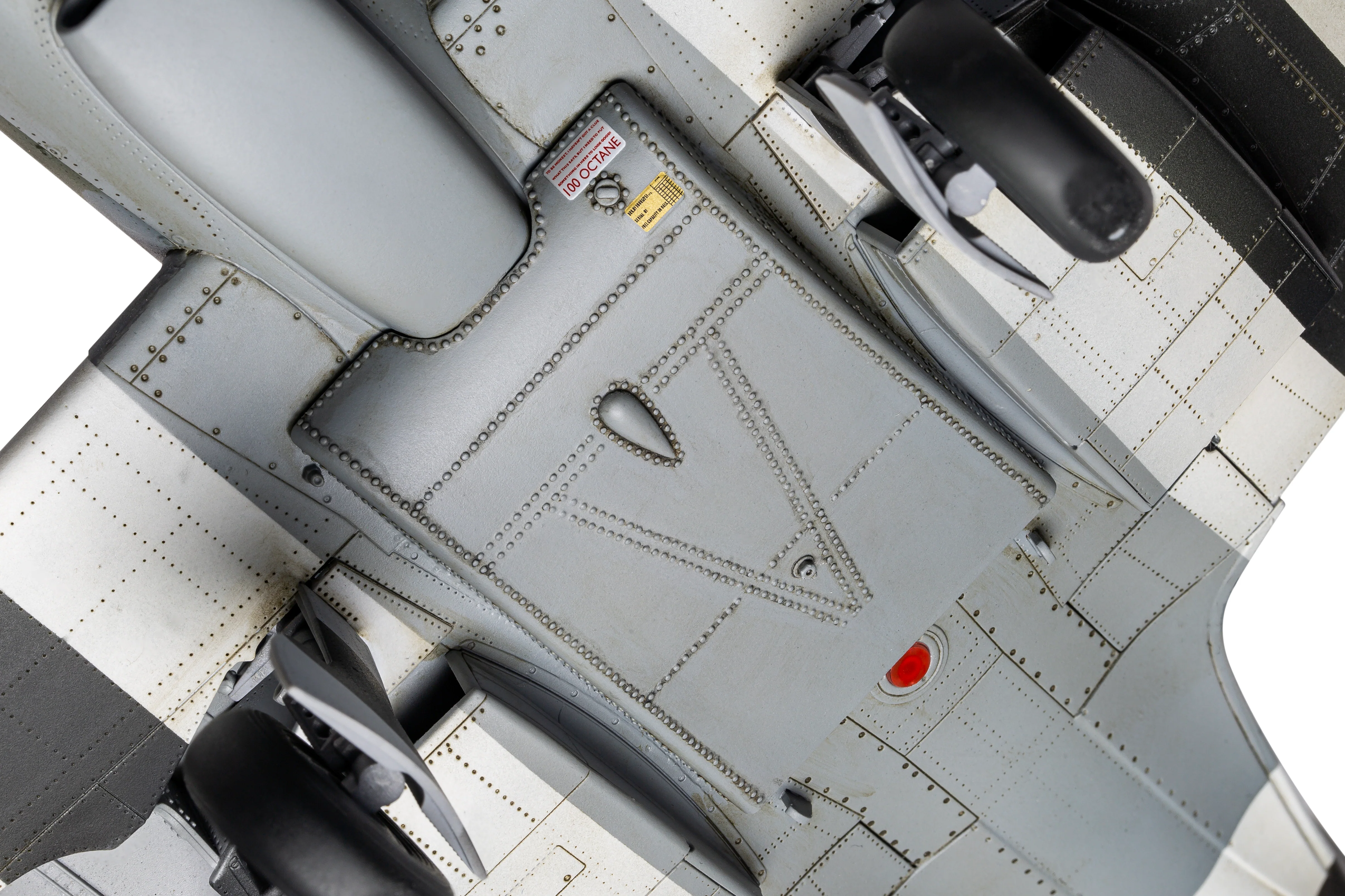
- 1 x Slipper tank.
Also included in this release is an external canopy masking set for the clear parts and a special edition pint glass, dedicated to ML208, one of the aircraft known to have participated in these missions.
Included Schemes:
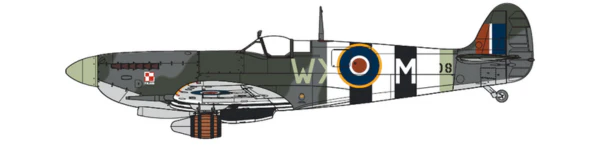
Scheme A: Supermarine Spitfire Mk.IXc, Aircraft flown by F/L. Tadeusz Szumowski, No. 302 (Polish) Squadron, Plumetot, (B.10), France, August 1944.
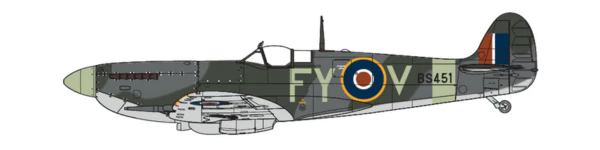
Scheme B: Supermarine Spitfire Mk.IXc, Aircraft flown by F/Lt. František Vancl, No. 611 Squadron, Royal Air Force Biggin Hill, England, December 1942.
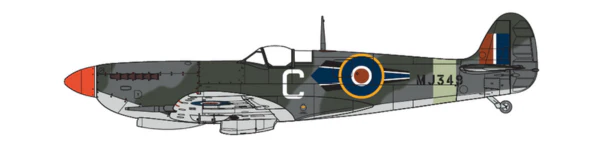
Scheme C: Supermarine Spitfire Mk.IXc, Aircraft flown by F/Sgt. Douglas Readdy, No. 73 Squadron, Royal Air Force Ta Kali, Malta, September 1946.
Original: $145.75
-70%$145.75
$43.73More Images


A17001A Supermarine Spitfire Mk.IXc Flying Dray Model Kit
Every kit will come with a FREE PINT GLASS!
The Mission
A few weeks after D-Day, a newspaper ran a story that reported that only watery cider and poisoned water was available to our boys on the front.
Sadly, no spare transport aircraft were available to bring non-essential items to the forward landing grounds. As a result of this, Several of the Squadrons who were previously operating out of the airfields along the south-coast are thought to have taken part.
After initially using long range fuel tanks, the next methodology utilised was to fly beer in a cask. A modification was carried out to enable the cask to be carried on the Spitfires’ bomb racks.
Pilots with the RAF’s No. 131 (Polish) wing, claimed to have invented the idea of the “beer bomb”, using casks that had home-made nosecones fitted to make them more
aerodynamic.
“Beer Bombs” were adopted by the Canadians and USAF during the war.
The Kit
In the summer of 1944, after the D-Day landings, British troops pressing into Normandy faced fierce resistance—and a dry pint glass. Supplies were tight, and morale was vital. So, in one of the war’s most unexpected missions, Spitfire pilots took to the skies not just with ammunition—but with beer.
Ingenious airmen modified drop tanks and strapped barrels beneath their wings, delivering much-needed refreshment to parched troops across the Channel. Some called it “Operation Cheers.” These weren’t official missions. They were flights of morale. Spitfires—symbols of British grit—became airborne drays for a brief, glorious period.
This Supermarine Spitfire Mk.IXc kit in 1:24 scale includes parts required to truly replicate the beer carrying Spitfires ‘Flying Drays’.
Extra Parts
Included in this special release are high detail resin parts required to truly replicate the beer carrying Spitfires ‘Flying Drays’.
- 2 x Beer barrels, including lids barrel ends.
- 2 x Nose cones (Information available indicates that these were probably made from the rear end of a P-51 drop tank)
- 2 x Bomb racks
- 1 x Slipper tank.
Also included in this release is an external canopy masking set for the clear parts and a special edition pint glass, dedicated to ML208, one of the aircraft known to have participated in these missions.
Included Schemes:
Scheme A: Supermarine Spitfire Mk.IXc, Aircraft flown by F/L. Tadeusz Szumowski, No. 302 (Polish) Squadron, Plumetot, (B.10), France, August 1944.
Scheme B: Supermarine Spitfire Mk.IXc, Aircraft flown by F/Lt. František Vancl, No. 611 Squadron, Royal Air Force Biggin Hill, England, December 1942.
Scheme C: Supermarine Spitfire Mk.IXc, Aircraft flown by F/Sgt. Douglas Readdy, No. 73 Squadron, Royal Air Force Ta Kali, Malta, September 1946.
Product Information
Product Information
Shipping & Returns
Shipping & Returns
Description
Every kit will come with a FREE PINT GLASS!
The Mission
A few weeks after D-Day, a newspaper ran a story that reported that only watery cider and poisoned water was available to our boys on the front.
Sadly, no spare transport aircraft were available to bring non-essential items to the forward landing grounds. As a result of this, Several of the Squadrons who were previously operating out of the airfields along the south-coast are thought to have taken part.
After initially using long range fuel tanks, the next methodology utilised was to fly beer in a cask. A modification was carried out to enable the cask to be carried on the Spitfires’ bomb racks.
Pilots with the RAF’s No. 131 (Polish) wing, claimed to have invented the idea of the “beer bomb”, using casks that had home-made nosecones fitted to make them more
aerodynamic.
“Beer Bombs” were adopted by the Canadians and USAF during the war.
The Kit
In the summer of 1944, after the D-Day landings, British troops pressing into Normandy faced fierce resistance—and a dry pint glass. Supplies were tight, and morale was vital. So, in one of the war’s most unexpected missions, Spitfire pilots took to the skies not just with ammunition—but with beer.
Ingenious airmen modified drop tanks and strapped barrels beneath their wings, delivering much-needed refreshment to parched troops across the Channel. Some called it “Operation Cheers.” These weren’t official missions. They were flights of morale. Spitfires—symbols of British grit—became airborne drays for a brief, glorious period.
This Supermarine Spitfire Mk.IXc kit in 1:24 scale includes parts required to truly replicate the beer carrying Spitfires ‘Flying Drays’.
Extra Parts
Included in this special release are high detail resin parts required to truly replicate the beer carrying Spitfires ‘Flying Drays’.
- 2 x Beer barrels, including lids barrel ends.
- 2 x Nose cones (Information available indicates that these were probably made from the rear end of a P-51 drop tank)
- 2 x Bomb racks
- 1 x Slipper tank.
Also included in this release is an external canopy masking set for the clear parts and a special edition pint glass, dedicated to ML208, one of the aircraft known to have participated in these missions.
Included Schemes:
Scheme A: Supermarine Spitfire Mk.IXc, Aircraft flown by F/L. Tadeusz Szumowski, No. 302 (Polish) Squadron, Plumetot, (B.10), France, August 1944.
Scheme B: Supermarine Spitfire Mk.IXc, Aircraft flown by F/Lt. František Vancl, No. 611 Squadron, Royal Air Force Biggin Hill, England, December 1942.
Scheme C: Supermarine Spitfire Mk.IXc, Aircraft flown by F/Sgt. Douglas Readdy, No. 73 Squadron, Royal Air Force Ta Kali, Malta, September 1946.